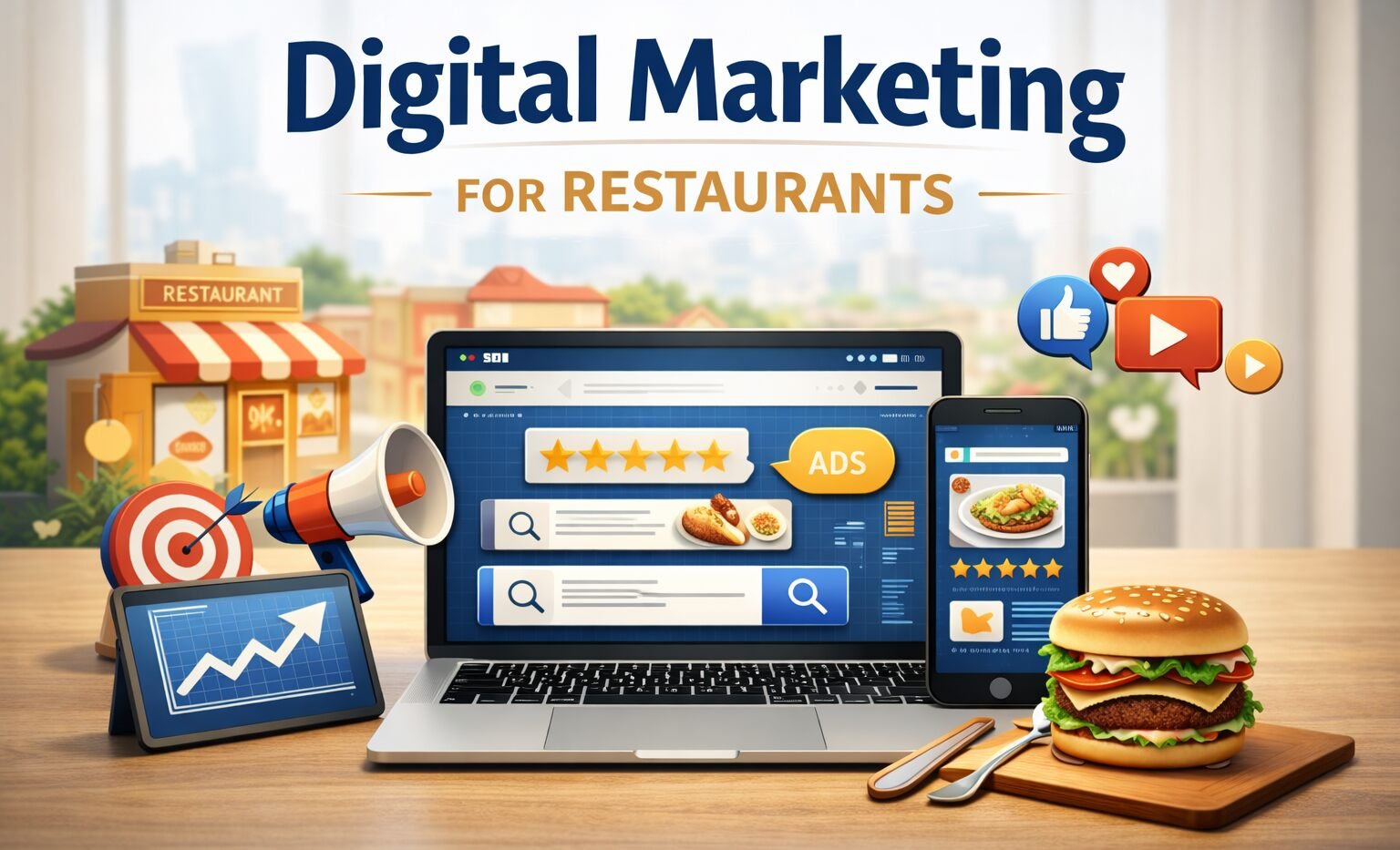
Operating a restaurant does not only mean being able to make delicious food, but also standing out on the internet. Customers have come to learn about eateries on platforms like Google, social media, and food ordering applications before even reading your menu.
This is the place where digital marketing for restaurants makes all the difference. Being present online not only will help you acquire new clients but will also create a strong following that will continue to patronize you. Learning to market restaurants is now a major challenge, as this is not merely an option on your side; it is a key to long-term growth.
Let’s explore why the importance of digital marketing continues to grow for restaurants and how you can turn it into your biggest success recipe.
Key Takeaways
- Digital marketing is essential for restaurant visibility, customer engagement, and long-term growth.
- A strong online presence—website, Google My Business, and local SEO—helps attract nearby diners.
- Social media, content, email marketing, and paid ads boost brand reach and drive more orders.
- Reviews, delivery platforms, and WhatsApp marketing increase trust, convenience, and repeat customers.
- Data-driven tracking helps refine campaigns and overcome challenges like budget limits and time constraints.
Why Digital Marketing Matters for Restaurants
The industry of dining has become digital. It does not matter whether your customers are typing best pizza near me or looking at Instagram for upcoming events; all that counts is how visible you are online and how you attract customers to visit your restaurant.
The importance of digital marketing in business is especially evident in the food industry, where visuals, reviews, and convenience play a part in making an immediate decision. An intelligent restaurant marketing strategy can make your kitchen respond to the demand of the customers based on the data, ingenuity, and appropriate marketing channels.
Importance of Digital Marketing for a Restaurants
In the case of restaurants, likes and shares are the only benefits of digital marketing. It enhances your brand image, enhances the trust of your customers, and increases the number of reservations and online ordering.
The importance of digital marketing strategy to small business restaurants is that it is affordable and quantifiable, as compared to traditional advertisements. It can be done precisely, whether it is advertising special deals, a loyalty program, or in response to a negative review.
Having a properly designed marketing plan for restaurants, even a small local cafe can compete with the well-established chains.
Building a Strong Digital Presence
1. Website
A professional website builds trust and enhances the customer experience, making visitors more likely to dine with you or order again. It also helps your restaurant appear higher in local searches.
A professional website creates a sense of trust and improves customer experience, which means that visitors will be more willing to eat with you or place an order again. It also assists in making your restaurant appear at the top of local searches.
2. Local Listings & Google My Business
It is important to claim and optimize your Google My Business profile in order to be visible in your region. When a person is looking at restaurants around the area, you can be his/her first choice with attractive photos and reviews.
Be sure to list your menu, business hours, and contact information on your website or order form. Keep your listing updated to stay relevant in local searches and attract nearby diners with ease.
3. SEO & Local SEO
There is no denying the importance of SEO in digital marketing for restaurants. By using location-based keywords such as the best biryani in Lucknow or a family restaurant in Delhi, you have a greater likelihood of appearing higher in the search engines.
Local SEO makes your restaurant known within your neighbourhood. Fuel reviews, develop place-based content, and post what you are doing in your upcoming events. This will enhance visibility and assist in getting new customers every time.
Digital Marketing Strategies to Use for the Restaurant Industry
1. Social Media Marketing
The core of digital marketing for the restaurant business is social media. Instagram and Facebook give you an opportunity to promote your atmosphere, stories about the chef, and appetizing foods.
Post new visually appealing content, live stream the events, or provide testimonials from customers. Post special offers and promote your regular customers; this will increase feedback and customer loyalty in the long run.
2. Content Marketing
The way you tell your story is content marketing. Post blogs regarding the inspiration of your chef, local ingredients, or behind-the-scene. Post videos and recipe clips, and content develops credibility.
It is among the most economical promotional approaches of restaurants to grow in the long-term and prompt you to remain top-of-mind as well as increase your search engine ranking and credibility.
3. Email Marketing
Email marketing is also one of the most effective and intimate marketing platforms for restaurants. Use it to promote upcoming events, menu changes, and special deals.
The other reward system that you can use to reward loyal customers is a loyalty program, where you can give them exclusive discounts or give them access to new dishes first. Individual emails make people more loyal to the company and willing to revisit it, making first-time customers a lifetime fan.
4. Paid Advertising / SEM / PPC
Minimal budget advertisements via Google Ads or Meta Ads can change the world. PPC campaigns can assist you in reaching certain demographics, popularizing special deals, or enhancing promotion during festive periods.
Such a marketing idea will make your restaurant appear when people are in the process of eating, which will result in immediate returns and ROI.
5. Delivery Platforms & Online Ordering Aggregators
Partnering with delivery apps like Zomato, Swiggy, and Uber Eats expands your reach to digital diners. Ensure your restaurant’s profile has clear images, correct details, and catchy descriptions for your menu items.
Online ordering has become a major revenue stream, and optimizing your listings ensures consistent visibility across platforms like Google and delivery apps.
6. PR, Influencer & Community Marketing
Collaborate with food bloggers and micro-influencers. Their posts and reviews provide authentic word-of-mouth and help reach audiences you might not reach organically.
Host small community events, tasting sessions, or charity drives, these activities humanize your brand and make your restaurant marketing plan more relatable to the local audience.
7. Local Marketing
Local marketing helps your restaurant connect with people nearby. Use posters, QR-based coupons, or neighborhood partnerships to drive traffic.
Geo-targeted ads on Google or Instagram also help when paired with local searches. Even a small marketing idea like offering a student discount or a festive combo can bring in steady footfall.
8. WhatsApp Marketing
WhatsApp marketing is an underrated gem in marketing for restaurants. It’s quick, direct, and highly engaging. Share special offers, upcoming events, or new menu items directly with your audience.
Use it to collect feedback, announce your loyalty program, or send reservation reminders. The personal nature of WhatsApp builds stronger customer loyalty and repeat business.
Reviews and Reputation Management
Online reviews can make or break a restaurant. Encourage satisfied diners to leave positive feedback and handle every negative review with professionalism and empathy.
Reputation management is vital in the digital marketing for restaurant space because diners rely heavily on what others say online. Responding gracefully enhances trust and improves customer experience.
Analytics and Tracking
One of the best benefits of digital marketing is its measurability. Use tools like Google Analytics and Facebook Insights to monitor website traffic, social engagement, and conversion rates.
Understanding which campaigns drive results helps refine your restaurant marketing strategies for long-term success. Data-driven decisions ensure your marketing efforts remain effective and scalable.
Challenges and How to Overcome Them
1. Limited Budget
Digital marketing is expensive as assumed by many restaurant owners. As a matter of fact, you can begin with an email marketing, local SEO, and Google My business; all cost-effective but impactful marketing platforms.
2. Time Constraints
Managing a restaurant is an activity that takes time. Automate the possible task such as post, email and reply responses. Or collaborate with professional experts such as Trigital Solutions, specializing in development of digital systems that are operable as you concentrate on service.
3. Lack of Consistency
Visual, tone, and communication consistency are the most important factors in memorable branding. Ensure that there is a single brand message in your website, social posts and listings.
4. Measuring Success
Monitor your performance on weekly basis. Analytics tools can help to understand what is working and what is not, and therefore, your restaurant marketing plan would be more efficient in the long-term.
Conclusion
The future of restaurants lies in digital innovation. A well-executed digital marketing for restaurant plan helps you attract new customers, build loyal customers, and deliver an unforgettable customer experience both online and offline.
From SEO and email marketing to WhatsApp engagement and review management, each strategy adds flavor to your brand’s success story.
At Trigital Solutions, we help restaurants craft custom restaurant marketing strategies that drive visibility, engagement, and growth. Whether you’re a local café or a multi-outlet chain, our data-driven approach ensures your restaurant shines where it matters most i.e.online.
FAQs:
1. What is digital marketing for restaurants?
Online marketing of restaurants is achieved through the digital platforms such as google, social media, email and websites as means of attracting more customers, marketing menu items and establishing customer loyalty to the restaurants.
2. How can I promote my restaurant on social media?
Post lovely pictures, events, and promotions. Connect with the followers, cooperate with influencers, and introduce specific ads to attract new customers and reinforce your restaurant online presence.
3. What is the best digital marketing channel for restaurants?
The most useful channels will be social media to interact with the audience, Google to do local searches, and email marketing to maintain loyal customers by paying them special offers and providing them with personal updates.
4. How do online reviews impact restaurant marketing?
Online reviews build credibility and influence customer decisions. Positive reviews attract new diners, while quick, polite responses to negative reviews improve trust and enhance the overall customer experience.
The internet reviews enhance credibility and impact on customer decision making. Positive reviews help to attract new diners, whereas the fast and polite feedback on the negative reviews increases the trust and the overall experience of the customer.
5. Should I use food delivery apps or focus on my own website?
Use both. Delivery apps will contribute to attracting new customers, whereas your site will enhance branding, client loyalty, as well as the long-term control of online ordering and marketing strategies.
6. What role does SEO play in restaurant marketing?
SEO will make sure that your restaurant finds its way to the local search results on the search engine such as Google, making your restaurant visible to the local diners and increasing your visibility online so that you can grow steadily.