
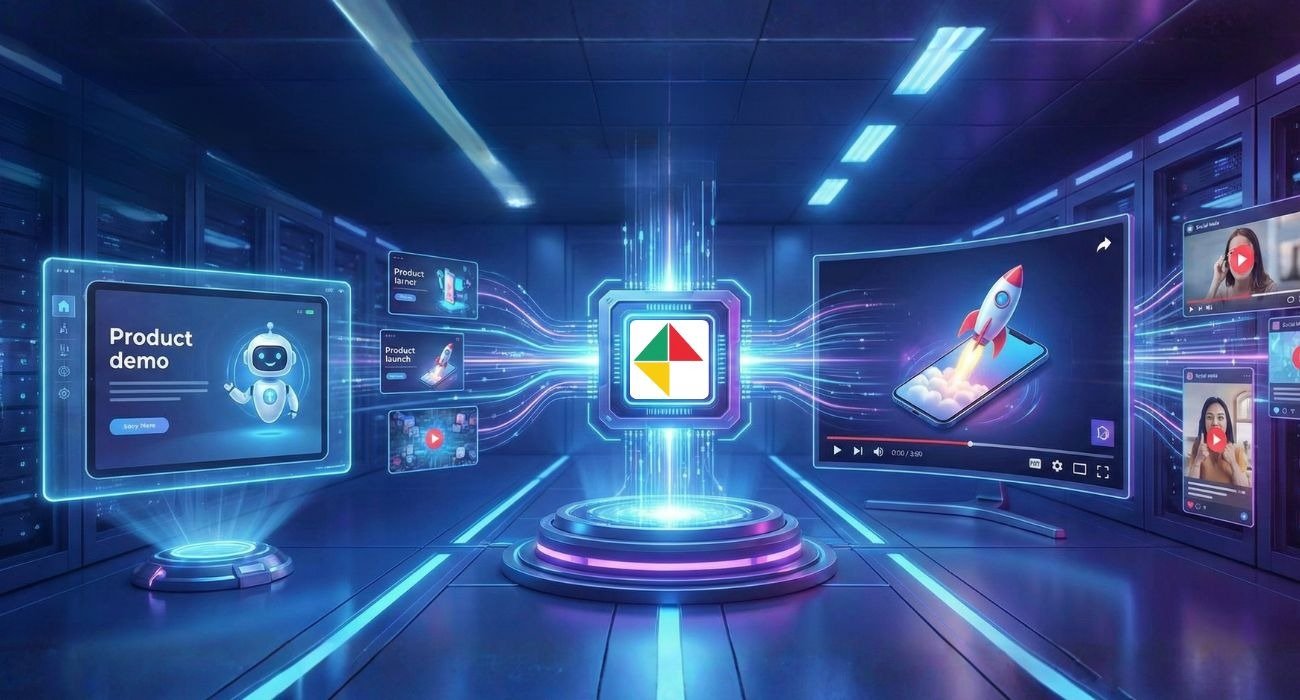
Is your product roadmap moving faster than your content production team can keep up with?
If you are a marketing director in e-commerce, SaaS, or B2B, you already know the statistic: video converts better than anything else. But you also know the painful reality of creating it.
Traditional video production is slow, expensive, and logistically heavy. Planning a shoot for a new product launch involves scripting, hiring talent, booking studio space, filming, and weeks of post-production editing. By the time the video is ready, your product UI might have already changed.
This is why many brands are now turning to an AI-powered video production company to streamline the process and scale video creation faster than traditional studios allow.
At Trigital Solutions, we aren’t just observing the rise of generative technology; we are actively implementing it to help brands break free from these legacy constraints. This comprehensive guide explores how AI product videos are redefining how businesses handle their two most critical visual assets: demos and launches.
Drive conversions with Trigital Solutions, an AI video production company crafting powerful AI product videos.
Get Your Free DemoKey Takeaways
- AI product videos speed up demos and launches by removing traditional production delays.
- Product demos stay up to date with instant script and visual edits.
- Micro-demos and personalization improve conversions and retention.
- Launch videos can be created, tested, and optimized faster with multiple variations.
- Costs drop significantly while scalability and localization increase.
What Exactly Are AI-Generated Product Videos?
Before we dive into strategy, it is crucial to clarify the technology. When we talk about AI product videos, we are not referring to robotic, low-quality slideshows or automated PowerPoint presentations. We are talking about studio-quality assets created with code, not cameras.
AI product video technology utilizes advanced generative AI models to create studio-quality visuals without the physical studio. It transforms text scripts, existing imagery, or raw footage into polished video assets.
The technology typically encompasses three powerful approaches that we utilize at Trigital:
- AI Avatars & Digital Presenters: We can now use hyper-realistic, synthetic human presenters to narrate a product demo. These avatars mimic human micro-expressions and intonation, eliminating the need for casting actors, recording studios, and expensive reshoots.
- Text-to-Video Generation: This allows creators to generate entirely new video scenes based on detailed text prompts. It is perfect for conceptual product launch teasers where you need high-concept visuals—like a car driving on Mars or a luxury watch floating in the ocean—without a Hollywood budget.
- Automated Video Editing: AI tools can now instantly slice, zoom, and highlight key features of a physical product or software interface based on predictive engagement data, turning raw footage into a finalized ad in minutes.
It is not about replacing human creativity; it is about removing the logistical friction that slows human creativity down.
AI Product Demo Videos: The New Standard
The product demo is the workhorse of your sales funnel. It is where interest turns into intent. However, traditional demos have a major weakness: Obsolescence.
If your SaaS platform updates its dashboard next week, your existing demo video is suddenly inaccurate. Re-shooting it is a nightmare of scheduling and budget approval. An AI generated product demo video solves this problem through agility. Because these videos are often driven by text-to-speech and AI avatars, updating a demo is as simple as editing a few lines of text in a script. The AI engine regenerates the voiceover and the corresponding visuals in minutes, not weeks.
Deep Dive: 3 Strategies for Next-Gen Demos
An AI product demo video is not just about recording a screen; it is about creating a frictionless path to understanding. Here are three specific strategies for modernizing your demos:
1. The “Micro-Demo” Strategy
Long, 10-minute walkthroughs are losing effectiveness. Users want immediate answers. The old way involved creating a single, monolithic video covering every feature. The new way utilizes AI-generated product videos to slice your comprehensive demo into 20 distinct “Micro-Demos.” Each clip answers a specific user query (e.g., “How to reset password” or “How to export data”). You can embed these micro-videos on specific help pages, providing instant gratification to users without forcing them to scrub through a long video.
2. Personalized Onboarding
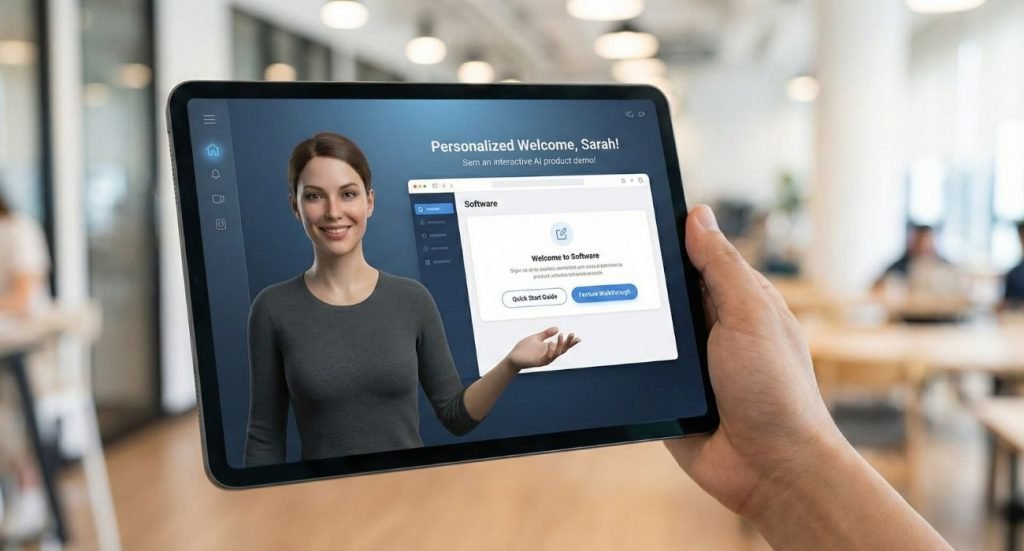
The sale doesn’t end at checkout. AI product videos are revolutionizing post-purchase retention. Imagine a new user signing up for your software. Instead of a generic “Welcome” email, they receive a video where an AI avatar guides them through the exact setup process for their specific plan tier. Because the video is AI-generated, you can automate this content creation, swapping out script variables (Name, Plan Type, Industry) for thousands of users instantly.
3. Visualizing the “Invisible”
For B2B tech companies, explaining backend architecture, cloud security, or API integrations is difficult because there is nothing physical to film. AI product demo videos can utilize generative imagery to create abstract 3D visualizations of data flows, encryption tunnels, or digital connections. This transforms dry, technical concepts into engaging visual narratives without requiring an expensive 3D motion graphics team.
AI Product Launch Videos: Winning the Hype Cycle
A product launch is a high-pressure event. You need a high volume of assets—teasers for social media, explainer videos for the landing page, and ads for paid campaigns—all ready simultaneously.
A traditional production timeline often forces marketers to finalize launch assets weeks in advance, leaving zero room for last-minute pivot adjustments. AI product launch videos allow you to move at the speed of the market. Instead of waiting on a rendering farm or an editor’s backlog, generative AI can rapidly iterate on concepts.
Deep Dive: 3 Strategies for High-Impact Launches
A launch is a campaign, not just a single video. AI product launch videos allow you to flood the zone with high-quality content across every channel.
1. The “Multiverse” Marketing Approach
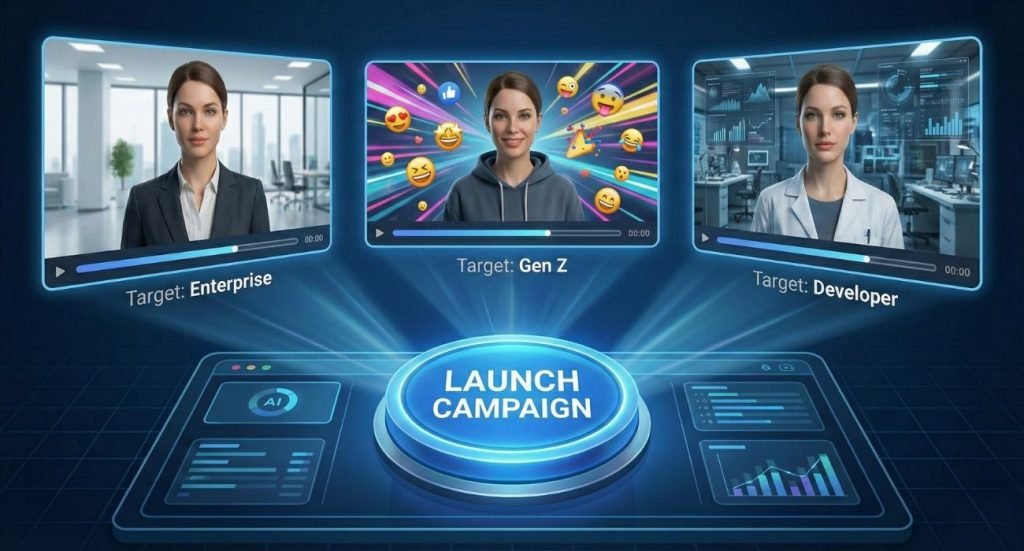
Different audiences care about different things. A CTO cares about security; a Marketing Manager cares about ease of use. With AI-generated product launch videos, you can take a single core script and generate three distinct “vibes” or visual styles:
- Professional/Corporate: Clean lines, blue tones, formal AI voiceover.
- Gen-Z/Social: Fast-paced cuts, vibrant colors, casual and energetic AI voiceover.
- Technical/Deep: Data-heavy visuals, slow pacing, authoritative tone. This allows you to target different buyer personas with highly relevant content during the same launch window, maximizing relevance and engagement.
2. A/B Testing Your “Hook”
The first 3 seconds of a launch video determine its success. In traditional production, you pick one opening scene and hope it works. AI product videos allow you to generate 10 different opening “hooks” (visuals + script) while keeping the body of the video the same. You can run these as ads, measure which hook stops the scroll, and then double down on the winner—optimizing your ad spend with data-backed creative.
3. Pre-Launch “Mood” Teasers
Often, marketing teams are waiting for the final prototype to start filming. This wastes valuable hype-building time. AI-generated product videos allow you to create “Mood Teasers” before the physical product even exists. By using text-to-video prompts, you can generate cinematic trailers that convey the feeling or problem the product solves (e.g., a chaotic office turning peaceful) without needing the physical device on camera. This builds an email waitlist weeks before the official launch.
The Business Case: Why Shift to AI Video Generation?
As a digital agency focused on ROI, Trigital Solutions looks at technology through the lens of business impact. The shift to AI product videos isn’t just about using cool tech; it’s about tangible metrics that affect your bottom line.
1. Drastically Reduced CPA (Cost Per Acquisition)
Video ads generally have a lower CPA than static images, but the cost of making the video often eats into margins. By eliminating costs associated with studio rental, lighting crews, actors, and extensive post-production hours, AI can reduce video production costs by 50% to 80%. This allows you to produce more creative variations for the same budget.
2. Unmatched Speed to Market
Turning a script into a finished video can now happen in a single day. This allows your marketing team to react to trends instantly rather than planning months ahead. If a competitor launches a feature in the morning, you can have a counter-video live by the afternoon.
3. Global Scalability (Localization)
For global brands, language barriers kill conversion rates. Traditional dubbing is expensive and often looks awkward. AI-generated product videos allow you to instantly translate your script and regenerate the video in 50+ languages. The best part? The AI avatar’s lip movements automatically sync to the new language, creating a native experience for every viewer.
Conclusion: The Future is Generative
The question isn’t whether AI will become a standard part of video production; the question is how quickly your competitors will adopt it before you do.
An AI product video strategy allows your brand to produce more high-quality content, test more variations, and personalize messaging at a scale previously unimagined. It shifts the focus from “how do we afford this video?” to “what story do we want to tell?” To better understand how to implement this approach effectively, explore our AI video production guide.
At Trigital Solutions, we specialize in crafting the perfect AI product demo video for your software or an unforgettable AI product launch video for your next big release. Experience the power of AI generated product videos and see the difference in your ROI. Our team at Trigital Solutions focuses on delivering leading video creation services by Trigital Solutions to ensure your projects stand out in a crowded marketplace. With our innovative approach, we combine cutting-edge technology and creative storytelling to engage your audience effectively. Trust us to transform your vision into captivating visuals that resonate with viewers and elevate your brand.
Are you ready to scale your video production without scaling your budget? Contact Us today to see how AI can power your next product launch.

Vishal Soni is the founder of Trigital Solutions, with over 24 years of expertise in digital marketing, including SEO, paid media, AI-driven video solutions, and business growth strategies. An MBA from IMI, he has helped generate ₹500 crore in business for agencies and startups, earning a reputation as a trusted advisor and industry leader. As an AI video expert, Vishal combines cutting-edge technology with practical execution to drive impactful results. His hands-on experience and commitment to digital excellence make his insights highly valued across the industry.